
The law surrounding the deposit obligation for single-use beverage packaging
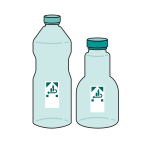
In Germany, it is the initial distributor who is under obligation to label single-use beverage packaging as being subject to deposit. The deposit must be charged on all retail levels, up to the point that packaging is handed over to the end user.
No matter what type of packaging you use to distribute your goods, you have to be registered with the LUCID Packaging Register and indicate which packaging types are distributed under what brand names. That also applies to single-use beverage packaging subject to deposit.
Exemptions from the deposit obligation
Certain single-use beverage packaging …
is expressly exempt from the deposit obligation due to its volume. The exemption applies to packaging with a volume of less than 0.1 and more than 3.0 litres.
is expressly exempt from the deposit obligation due to its design or material combination. Exemptions apply exhaustively to square, gable-top or cylindrical beverage cartons, or tubular bags for beverages made from polyethylene, or foil stand-up pouches.
is exempt from the deposit obligation due to its contents (cf. section 46 (4) no. 7 VerpackDG (Packaging Law Implementation Act):
- sparkling wines, sparkling wine-based cocktails with a sparkling wine content of at least 50 percent and sparkling drinks made of alcohol-free or low-alcohol wine;
- wine and wine-based cocktails with a wine content of at least 50 percent and alcohol-free or low-alcohol wine;
- (processed) beverages and mixed beverages similar to wine, including non-alcoholic or low-alcohol beverages, with a content of wine-like products of at least 50 percent;
- alcohol products subject to alcohol tax pursuant to section 1 (1) AlkStG (Alcohol Duty Act), unless these products are subject to alcopop tax pursuant to section 1 (2) AlkopopStG (Alcopop Duty Act);
- other mixed beverages containing alcohol with an alcohol content of at least 15 percent;
- milk and dairy drinks with at least 50 percent milk content;
- other drinkable dairy products as set out in section 3 (1) no. 6 MilchPQV (Milk Product Quality Ordinance), especially yoghurt and kefir, if the other drinkable dairy products do not contain a substance listed in Appendix 8 FrSaftErfrischGetrV (Ordinance on Fruit Juices and Soft Drinks);
- fruit juices within the meaning of the FrSaftErfrischGetrV and vegetable juices;
- non-carbonated fruit nectars within the meaning of the FrSaftErfrischGetrV and non-carbonated vegetable nectars;
- food for special medical purposes within the meaning of Article 2 (2) (g) Regulation (EU) No 609/2013;
- beverages with an alcohol content of 1.2 percent by volume or less which are placed on the market as alcohol-free or low-alcohol alternatives to beverages listed under heading 2208 of the Combined Nomenclature within the meaning of section 1 (2) no. 1 (a) in conjunction with section 4 AlkStG and whose descriptive label and design indicate such a beverage.
Participating your single-use beverage packaging in the German deposit scheme ('DPG')
Registering with the LUCID Packaging Register is not enough. You must also participate your single-use beverage packaging in the DPG deposit scheme.
For more information about the deposit obligation, please visit the DPG website.
DPG provides an overview of which single-use beverage packaging is subject to the deposit obligation.